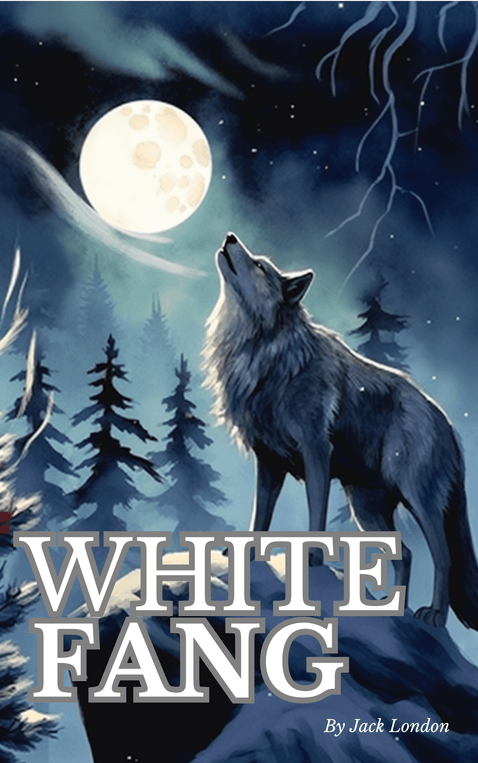
White Fang
"White Fang" is a novel by American author Jack London (1876–1916) — and the name of the book's eponymous character, a wild wolfdog. First serialized in Outing magazine between May and October 1906, it was published in book form in October 1906. The story details White Fang's journey to domestication in Yukon Territory and the Northwest Territories during the 1890s Klondike Gold Rush. It is a companion novel (and a thematic mirror) to London's best-known work, The Call of the Wild (1903), which is about a kidnapped, domesticated dog embracing his wild ancestry to survive and thrive in the wild.
Much of White Fang is written from the viewpoint of the titular canine character, enabling London to explore how animals view their world and how they view humans. White Fang examines the violent world of wild animals and the equally violent world of humans. The book also explores complex themes including morality and redemption.
Jack London (1876–1916) was an American novelist, journalist, and social activist known for his adventure stories and vivid portrayals of survival and nature. His most famous works, The Call of the Wild and White Fang, explore the struggle between civilization and the wild. Drawing from his own rugged experiences, London’s writing reflects themes of individualism, endurance, and social justice, making him a lasting figure in American literature.